| The Lymphocyte Experiment
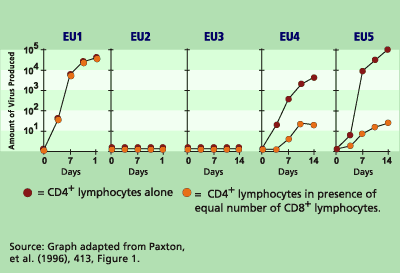
In this experiment, CD4+ (HIV host cells) and CD8+ cells (to test the immune response) are taken from five people known to be EU. The red circles show the amount of virus produced when the individual’s CD4+ cells are mixed with HIV in vitro in the absence of other cells. The orange circles show the amount of virus produced when the person’s CD4+ cells are mixed with HIV in the presence of their own CD8+ lymphocytes.
Consider the data and choose the mechanism of resistance you would like to explore.
INSTRUCTIONS:
For a summary of the data, read the DATA ANALYSIS information below
.
To continue, choose the hypothesis that you would like to explore further.
| | | |
| DATA ANALYSIS:
An analysis of the experimental data reveals that results fall into three different groups, suggesting different mechanisms for immunity: - EU4 and EU5 have CD4+ cells that can be infected by HIV (red circles). When their CD8+ cells are present, the cells provide some protection against HIV (orange circles). These results fit the “response” hypothesis — EU people mount an immune response that fights off HIV.
- EU2 and EU3 have CD4+ cells that produced no virus, consistent with the “infection hypothesis” — cells of EU people can't be infected, or don’t allow viral replication.
- EU1 has CD4+ cells that can be infected by HIV (black circles), and this person’s CD8+ cells do not provide protection (white circles). Although this person had high-risk exposures, perhaps none of the exposures transmitted virus or this person has another mechanism of HIV resistance.
| |